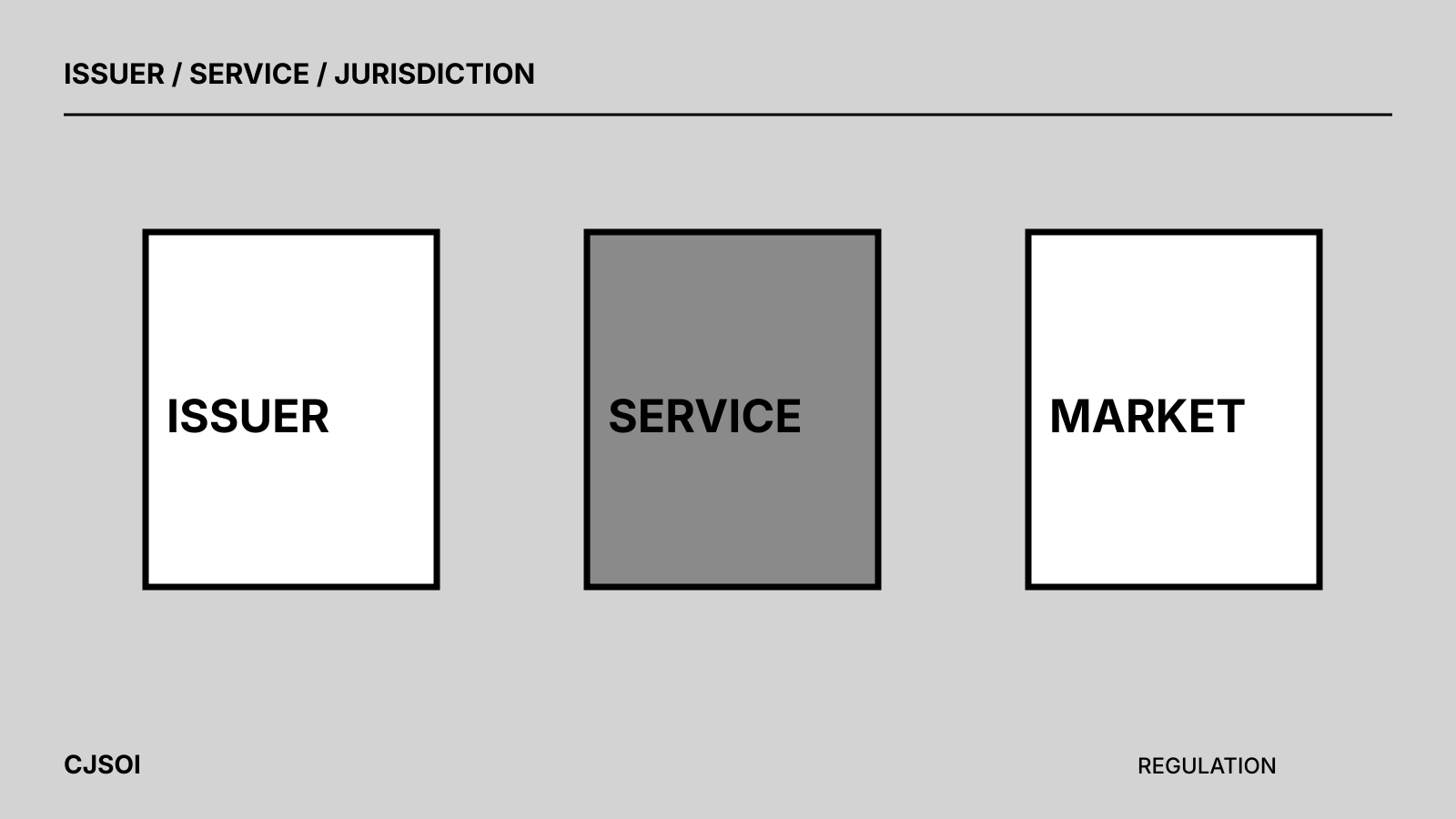
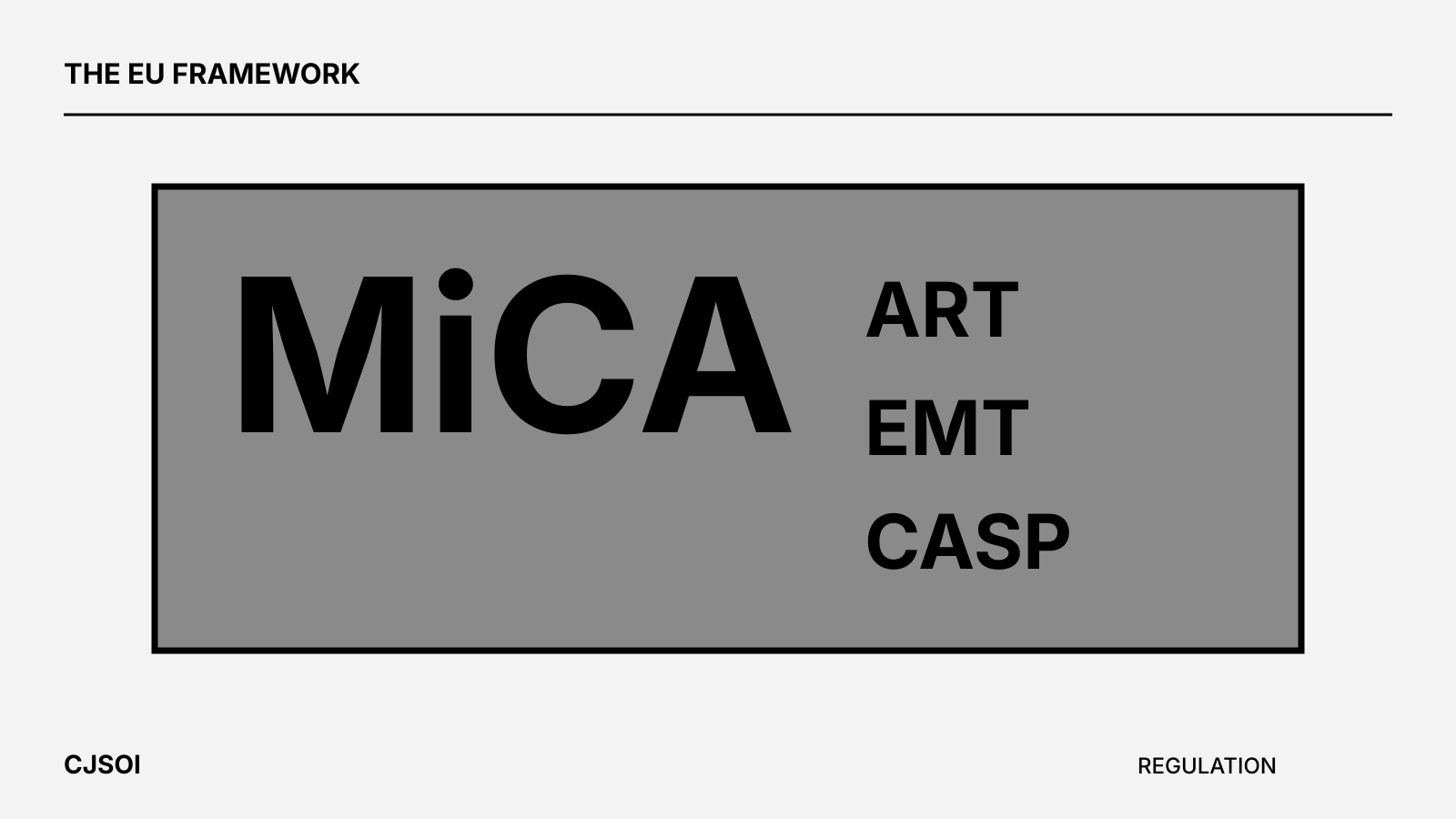
MiCA is the European Union’s Markets in Crypto-Assets Regulation. Its stablecoin framework distinguishes e-money tokens from asset-referenced tokens and separates issuer requirements from rules for crypto-asset service providers.
That vocabulary is useful before reading a claim that a token or platform is “MiCA compliant.” The next questions are which entity, which activity and which permission the claim refers to.
Two categories behind the stablecoin label
Article 3 of MiCA defines an e-money token by its aim to maintain value relative to one official currency. An asset-referenced token uses another reference value, right or combination of references, and is not an e-money token.
The distinction is legal rather than a choice of blockchain. The same network can carry assets with different classifications. A marketing label such as “digital cash” does not establish the category.
A product’s full structure matters. This article explains the categories at a general level; it does not classify an individual token.
The issuer and the platform are separate
The EBA explains that issuers of the two token categories need the relevant authorization to carry out activities in the EU. It also publishes technical standards and guidelines addressing topics such as reserves, liquidity, own funds and redemption planning.
A platform providing custody or exchange services presents a different authorization question. An authorized service provider does not make every asset it supports an approved investment.
Likewise, issuer authorization does not automatically cover every intermediary or every service built around the token. Trace the actual entity named in each document.
Read a register entry carefully
ESMA publishes MiCA register information across distinct categories, including token issuers, service providers and white papers.
ESMA explicitly warns that listed crypto-asset white papers have not been reviewed or approved by a competent authority. A document being present in a register is therefore not an endorsement of the asset’s merits.
The entity name, category, permitted services and record status matter more than the mere presence of a familiar brand. Register updates can also follow information supplied by national authorities.
Supporting rules have their own status
MiCA is accompanied by technical standards and guidelines. The EBA’s index distinguishes documents submitted to the European Commission from measures adopted and published in the Official Journal.
That status is consequential. A draft technical standard should not be described as an already applicable final requirement simply because it appears on a regulator’s website.
For a practical reading habit, note the document version and date, then check the relevant authority’s current material. Rules, implementation measures and product arrangements can change.
What this framework does not answer
Authorization and disclosure requirements do not guarantee a token’s market price or remove technical, custody and counterparty risks. A customer still needs to understand the product and the intermediary used to access it.
For the broader comparison, see who regulates a stablecoin. For the mechanics of getting money back, see stablecoin redemption.
Questions
Is every dollar-linked token automatically classified by its ticker?
No. The product’s actual structure and legal analysis determine its treatment.
Does a registered white paper mean official approval?
No. ESMA expressly distinguishes white-paper listing from regulatory approval of its content.
Is a service-provider authorization the same as issuer authorization?
No. They concern different entities or activities, even when one brand appears in both contexts.
Sources
MiCA, Regulation (EU) 2023/1114; EBA issuer framework; ESMA MiCA materials. General information checked September 26, 2026, not legal advice.