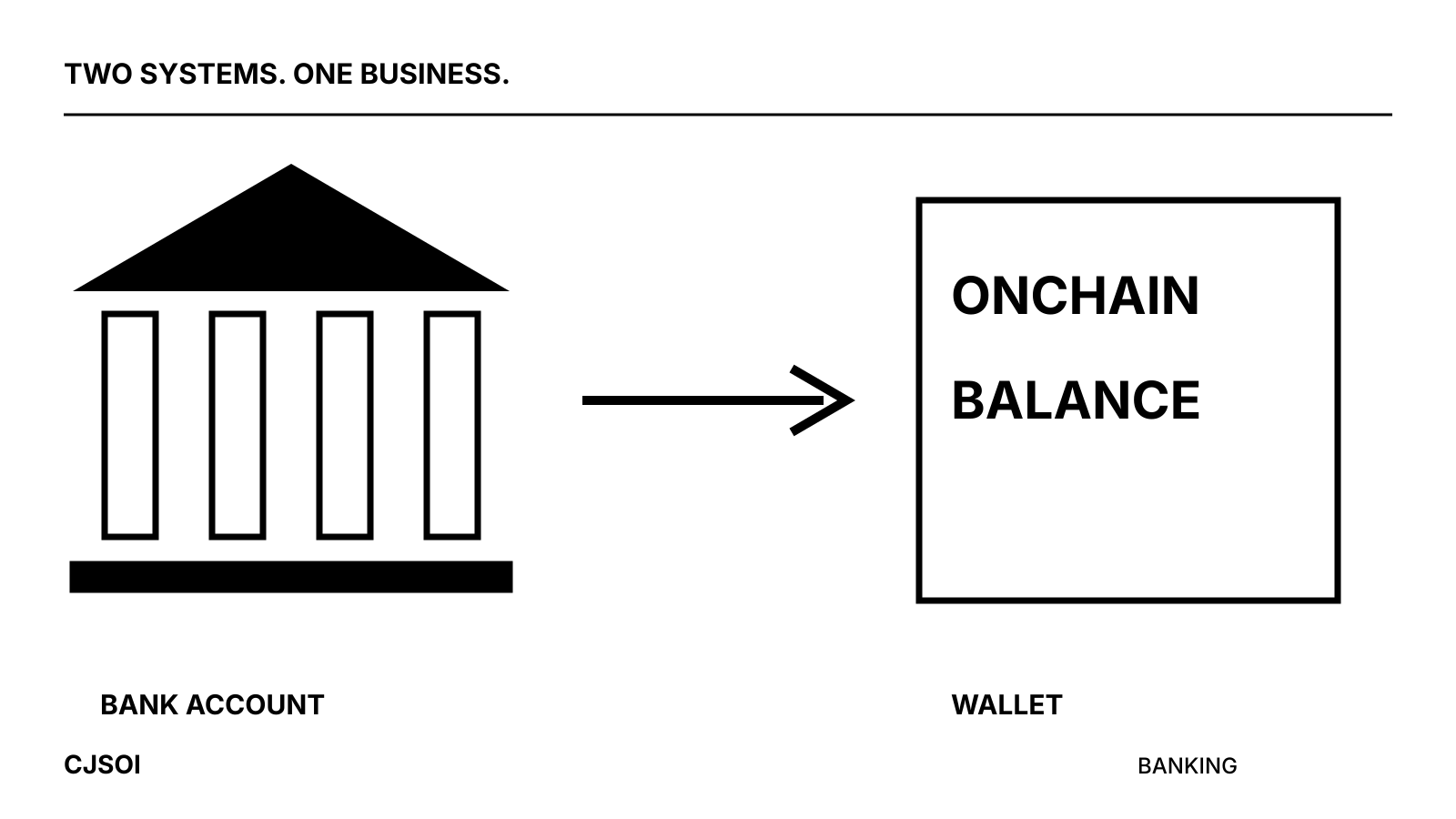
A crypto company may move tokens around the clock and still need a bank account to receive fiat, pay ordinary expenses or connect customers to cash. Running a blockchain product does not make every counterparty willing or able to settle onchain.
The dependency becomes clearer when the business is separated into three parts: customer funding, the product itself and the company’s own finances.
Customers begin and end in different places
A customer may start with dollars in a bank account, convert them into a stablecoin and later want dollars credited elsewhere. The middle step can happen on a blockchain while both ends still involve banking infrastructure.
Circle Mint’s documentation makes this relationship explicit: eligible institutional customers connect bank funding with stablecoin minting and redemption. The blockchain is part of the route, not a replacement for every other component.
A business that accepts only tokens may still rely on providers whose own funding or redemption processes use bank accounts. Moving the relationship to an intermediary changes where the dependency sits.
Reserves connect tokens to traditional assets
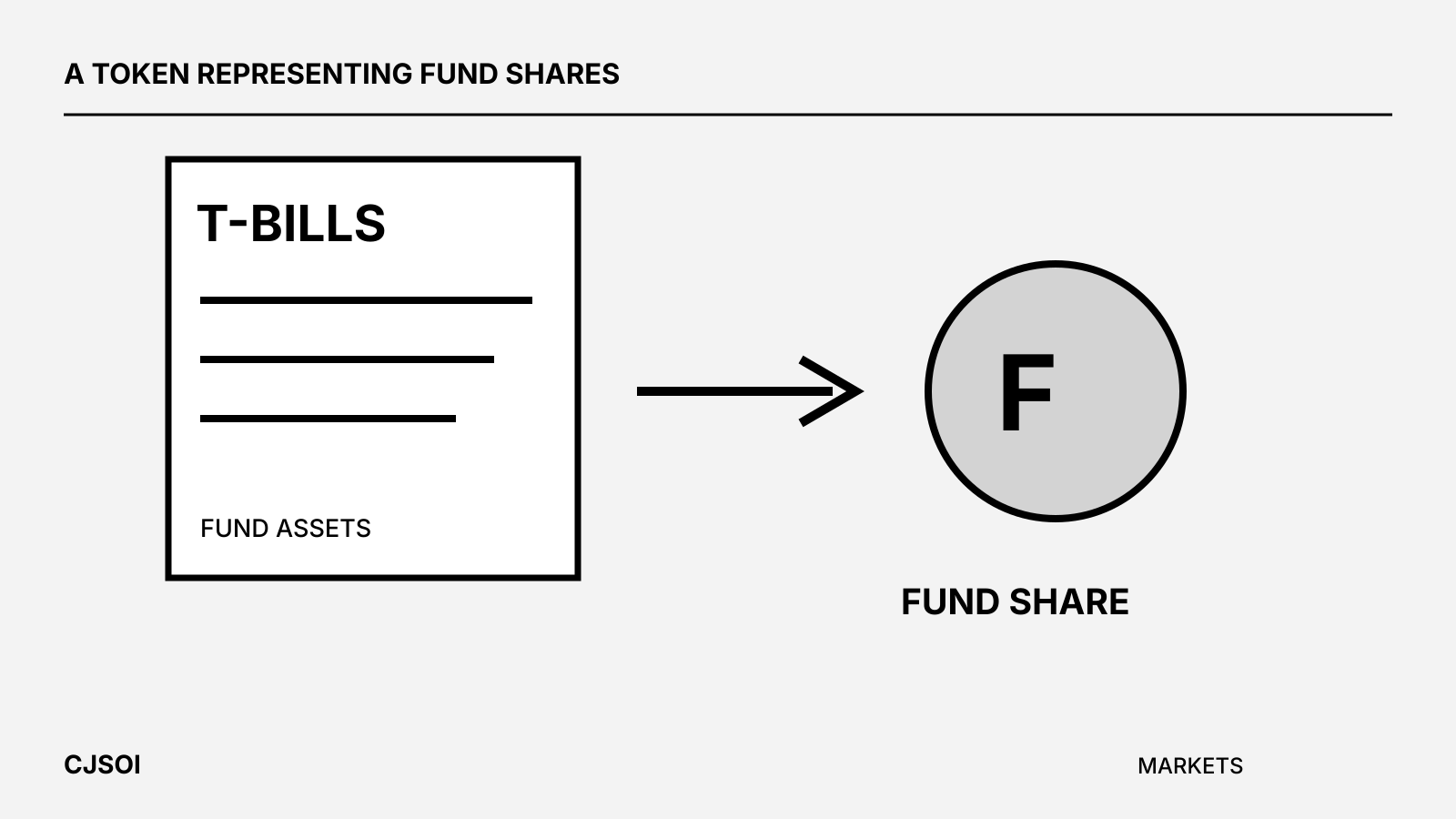
Reserve-backed stablecoins can hold cash and securities through financial institutions. Circle’s disclosures, for example, describe cash at banks and short-duration Treasury-related reserve assets.
That connection is relevant even to a user who never logs into a bank. The token’s ability to maintain its intended value depends partly on arrangements outside the blockchain: asset custody, liquidity management and redemption access.
A blockchain balance is visible evidence of tokens. It is not a complete record of those offchain relationships.
A company also has its own bills
Payroll, tax obligations, office costs and suppliers may be denominated and payable in conventional currency. Whether a particular business can pay them in stablecoins depends on its counterparties and local requirements.
This is an operational distinction rather than a claim that every expense everywhere must be paid through a bank. The point is that a business needs a payment route accepted by the recipient. Its preferred asset is only half the decision.
It should also keep its operating money conceptually separate from customer assets or reserves. The accounting and legal arrangements depend on the business model, but using one wallet interface does not make those balances interchangeable.
Banking access is itself a risk to manage
The FATF’s virtual-assets overview notes that providers can face difficulties accessing bank accounts and other financial services. Its standards call for risk-based supervision and preventive controls in the sector.
A banking relationship can therefore be a significant part of a crypto company’s operations. Service availability, account restrictions and payment processing all deserve attention alongside network uptime.
For a closer look at the boundary, see the full cost of a cross-border stablecoin payment. The cheapest token transfer is not necessarily the cheapest completed payment.
Questions
Can an onchain business have no direct bank account?
Some activities may be organized that way. It does not establish that the business and all its providers have no banking dependencies.
Does a wallet balance prove the reserve assets exist?
No. Onchain token records and offchain reserve disclosures provide different evidence.
Does adding a payment intermediary remove the banking leg?
Not necessarily. The intermediary may perform that leg on the customer’s behalf.
Sources
Circle Mint; Circle transparency; FATF virtual-assets overview.